
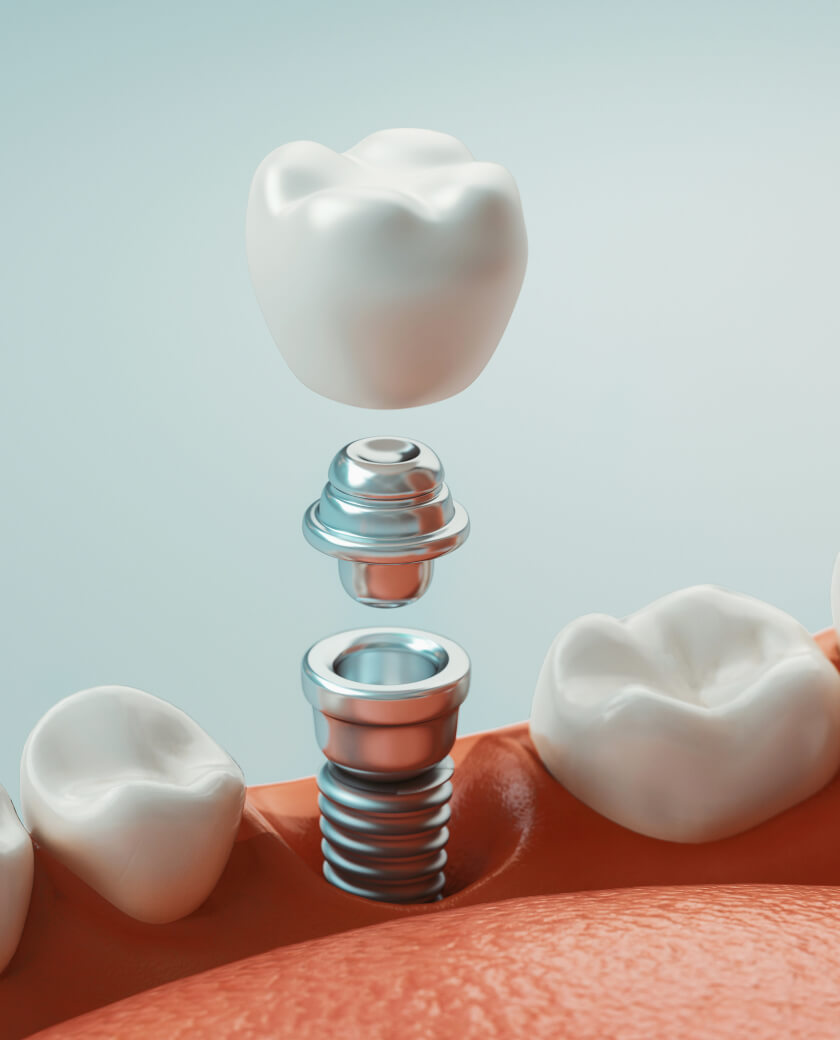
What Are Dental Implants?
Dental implants are small posts placed into the jawbone to serve as artificial tooth roots. Once the implant has healed and integrated with the surrounding bone, it can support a custom dental crown, bridge, or denture.
Unlike a traditional bridge or denture, an implant replaces the root of a missing tooth, creating a stable foundation for your replacement teeth. Implant-supported restorations can help restore everyday functions such as eating and speaking while providing a natural-looking appearance.
The Benefits of Dental Implants
Dental implants can offer several advantages when replacing missing teeth:
- A secure, stable foundation for replacement teeth
- A natural-looking appearance
- Improved comfort when eating and speaking
- Replacement of a missing tooth without relying on neighboring teeth
- A long-term solution for tooth loss
- Support for implant-retained dentures and other restorations
Personalized Dental Implant Treatment
We offer Nobel Biocare dental implants as part of our approach to tooth replacement. Nobel Biocare is an established name in implant dentistry, with implant systems designed to support a variety of tooth-replacement solutions. If additional treatment is needed before placement, such as a tooth extraction or bone graft, we can incorporate those procedures into your personalized treatment plan.
Single Implants — When one tooth is missing, a single dental implant can provide a stable foundation for an individual crown. Rather than preparing neighboring teeth to support a traditional bridge, the implant is designed to replace the missing tooth root.
Implant Dentures — If you are missing several or all of your teeth, implant-supported dentures can provide additional stability compared with traditional dentures. These dentures attach to dental implants rather than resting entirely on the gums. For patients who have struggled with loose or uncomfortable traditional dentures, implant-supported dentures may offer a more stable and confident way to restore their smile.


The Dental Implant Process
Your treatment will be customized to your needs, but the process generally includes:

Consultation and Evaluation
We examine your oral health, discuss your goals, and use diagnostic imaging to determine whether dental implants are appropriate for you.

Treatment Planning
We develop a personalized plan based on the number of missing teeth, available bone, bite, and desired restoration.

Implant Placement
The dental implant is carefully positioned in the jawbone. Healing time is then needed for the implant to integrate with the surrounding bone.

Restoration
Once healing is complete, your custom crown, bridge, or implant-supported denture can be attached to the implant or implants.

Follow-Up Care
We continue to monitor your oral health and the condition of your implant restoration to help you maintain your smile for years to come.

Are Dental Implants Right for You?
Dental implants may be a great option if you are missing one, several, or all of your teeth. Candidacy depends on factors such as your jawbone health, gum health, oral hygiene, overall health, and treatment goals.
If you have experienced bone loss, that does not necessarily mean implants are off the table. Bone grafting or other preparatory procedures may be considered to create a suitable foundation for implant placement. A private consultation is the best way to determine which restorative option is appropriate for your smile.

Dr. Chang Answers Your Questions
-
How long does dental implant treatment take?
The timeline varies depending on your individual treatment. Some patients may need additional procedures, such as extractions or bone grafting, before implant placement. Healing and integration also take a few weeks before the final restoration can be placed. During your consultation, we can provide a more personalized estimate based on your treatment plan.
-
Are dental implants comfortable?
Dental implant placement is performed with local anesthesia, and sedation options are also available for patients who experience dental anxiety or prefer additional relaxation. Some soreness and swelling are normal after treatment, but these effects generally improve as you heal. Once recovery is complete, dental implants are often the most comfortable and natural-feeling tooth replacement option available.
-
How do I care for dental implants?
Implants should be cared for much like natural teeth, with regular brushing, flossing, and professional dental visits. Your specific cleaning routine may vary depending on whether you have an individual crown, bridge, or implant-supported denture. Regular examinations allow us to monitor your implants, gums, and restoration.
-
Can dental implants replace my dentures?
Implant-supported dentures can provide a more stable alternative to traditional dentures by attaching to dental implants placed in the jaw. If you are interested in replacing your traditional dentures with implant dentures, our team would be happy to assess your current situation to determine if you are a good candidate.
-
What happens if I don’t have enough bone for dental implants?
Bone loss does not automatically rule out dental implants. Depending on your individual anatomy, a bone graft may be recommended to add support in an area where bone has been lost. Your imaging and examination will help determine whether grafting is appropriate.